




Drug Court Program’s Executive committee reconvenes, program offers alternative
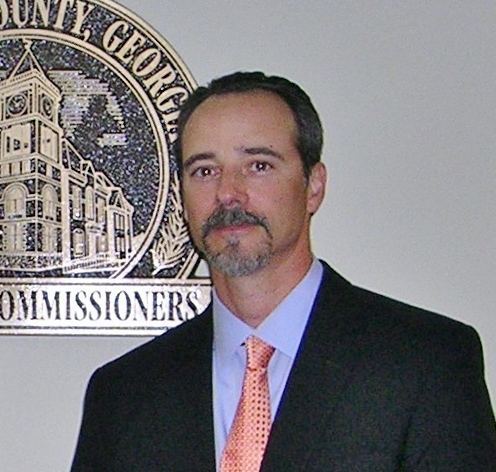 Paulding County’s Drug Court Program recently held its third meeting of the program’s executive committee, a steering committee made up of community leaders and concerned citizens that meets about twice a year.
According to Paulding Superior Court Judge Dean Bucci, who heads up the program, for the first time the committee was addressed by an active participant, a young man was facing six to eight years of prison for his fourth drug-related offense. Instead of sitting in prison, he is keeping a job, keeping treatment appointments, attending 12-step meetings at night, abiding by a curfew, and has more than six months sobriety under his belt. Importantly, he has re- established his connection with his son, Judge Bucci said, and added that participants are parents to a total of 16 children.
“One of our goals is to convert tax consumers into tax payers. Instead of passing months in jail or prison at taxpayer expense, our participants are required to hold jobs and pay taxes. We have three waiters, a mechanic, six factory workers, a cook, a construction worker, a woodworker, and a retail employee. One of our participants is actively working on her GED. Two are preparing to take GED classes,” Bucci said.
Bucci said the program has recently undergone a major change from a single treatment provider to a local treatment group, which has an RN, a licensed professional counselor, a psychiatrist, a certified addictions counselor, and other counselors on staff.
“They have their own offices. This will offer more flexibility and ultimately allow for evening sessions, which will assist participants in meeting their employment obligations,” he said.
Paulding’s program is sectioned into five phases. Participants begin in phase one and earn their way up to phase five, which is followed by graduation and then six months of aftercare. As they earn their way up in phases, the restrictions and requirements upon them are gradually reduced. The program is projected to last 18 months, not counting the aftercare. However, in order to progress, participants have to meet many stringent requirements, and they usually do not ‘phase up’ as soon as possible. Under-performing participants may be “frozen” in a phase until they meet certain requirements. Not all participants that enter the program will complete it, and those that do not face the traditional criminal justice system.
The program relies on three funding sources: a State Grant, Drug, Alcohol, Treatment and Education (DATE) funds, and user fees. The State Grant application was due last week and will provide the vast majority of funding for the grant year ending June 30, 2018, and requires a 10 percent match to the grant funds, which is paid for from the DATE fund.
The DATE fund is generated from surcharges on criminal fines and is used for Drug, Alcohol, Treatment and Education. “Participants pay a weekly user fee of $35, which we access for limited purposes related to the program, as needed,” Bucci said. Paulding’s Board of Commissioners green-lighted the opportunity to establish a felony drug court program when they voted to accept a grant from the state, adding Paulding to the growing list of court systems throughout the state now pursuing similar programs. The program launched in January 2016, with the first inductee entering that month and has grown steadily since then to 21 participants, 18 of which are active in the Program (two are in confinement and one in warrant status.) One participant was ejected since the program started.
Judge Bucci wants to continue to grow the program so that the criminal justice system in Paulding County has a better option for non-violent, non-sex offenders whose conduct is being driven by addiction.
Georgia incarcerates about 58,000 annually and is the fourth largest prison population in the nation, which works out to about one in 13 citizens. $1.1 billion in tax dollars is spent to run the state’s prison system.
And a large percent of offenders will return to prison within three years, Bucci said, and added that many of those will be back within the first year. Of the roughly 18,000 released each year by the department of corrections, about a third of them are reconvicted on new felonies.
“Our goal is to reduce recidivism, improve public safety, and to use tax dollars and limited prison and jail space wisely...prison is the right answer for many offenders, but it is not the answer for every offender. Programs such as ours are an important component of Governor Deal’s criminal justice reforms.” Bucci said.